
Introduction
Belts are essential accessories that blend function with fashion. Beyond simply holding up your pants, they can define your silhouette, add a pop of style, and tie an entire outfit together. From classic leather straps to bold statement pieces, belts come in a variety of styles that suit every occasion and personal taste.
In this post, you’ll discover the different types of belts, how to choose the right one for your look, and styling tips to elevate your wardrobe effortlessly. Whether you’re dressing for work, casual outings, or special events, belts are the versatile finishing touch you didn’t know you needed.
Types of Belts and When to Wear Them

Slim Belts
Slim belts are sleek and understated, making them ideal for dresses, blouses, and formal outfits. They gently define the waist without overpowering the look, adding a polished touch to workwear or elegant ensembles.
Wide Belts
Wide belts are perfect for layering over outerwear like coats, blazers, or chunky sweaters. They create a bold, statement-making silhouette by cinching the waist and adding structure to loose or oversized pieces.
Chain Belts and Embellished Belts
For a dose of glam and edge, chain belts and embellished designs are the way to go. These accessories can elevate simple outfits, perfect for parties, nights out, or whenever you want to add sparkle and personality.
Fabric and Braided Belts
Casual, comfortable, and often colorful, fabric and braided belts suit boho-inspired looks and summer styles. They pair well with jeans, shorts, and flowy dresses, adding texture and a laid-back vibe.
Styling Belts with Different Outfits

With Dresses:
Use belts to define your waist and add visual interest to plain or flowy dresses. A slim belt works well for delicate fabrics, while a wide belt can create a bold contrast and shape.
With Jeans and Trousers:
Belts instantly elevate casual looks when paired with jeans or trousers. Choose a classic leather belt for a polished everyday style or experiment with colorful or textured belts to add personality.
Over Coats, Blazers, and Cardigans:
Adding a belt over outer layers helps define your silhouette and adds structure to loose or oversized garments. Wide belts work especially well here, creating a flattering, cinched look.
With Skirts:
Pair belts with skirts to complement both casual and formal styles. A slim belt can add sophistication to pencil skirts, while a braided or fabric belt complements flowy or bohemian skirts beautifully.
Creative Ways to Wear Belts
High-Waisted vs. Low-Waisted Belt Placement
Experiment with belt placement to change your outfit’s vibe. High-waisted belts accentuate the waist and elongate the legs, perfect over dresses or tunics. Low-waisted belts create a relaxed, casual look when worn with jeans or skirts.
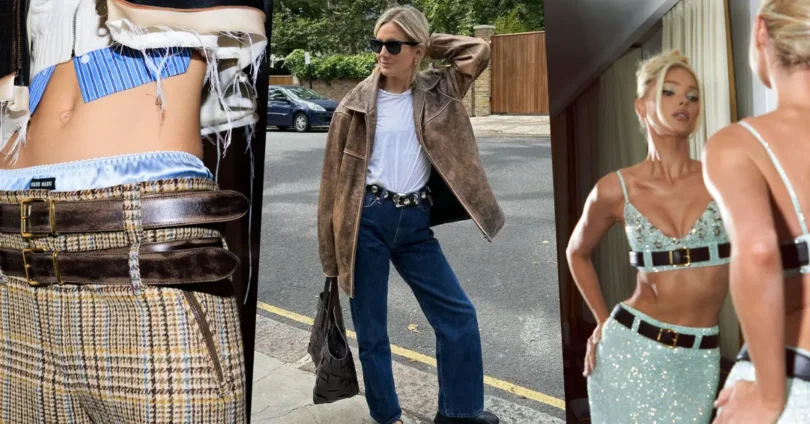
Layering Multiple Belts for a Trendy Look
Try stacking two or more belts of different widths, colors, or textures to add dimension and edge to your outfit. This works well over coats, dresses, or even oversized shirts for a fashion-forward statement.
Using Belts as Necklaces or Headbands
Get creative by wearing thin belts as unconventional accessories—wrap a delicate belt around your neck as a choker or use a fabric belt as a stylish headband. These unexpected uses add personality and flair.
Knotting and Tying Techniques for Fabric Belts
Play with different ways to knot or tie fabric belts for unique styles—try a simple bow, a loose knot, or a twisted wrap. These little details can turn a basic belt into a standout accessory.
Matching Belts with Accessories
Coordinating Belts with Shoes and Bags
To create a cohesive look, match your belt’s color and material with your shoes and bag. Classic combinations like brown leather belt with brown leather shoes and a matching bag create a polished appearance. For a more modern twist, try contrasting colors or complementary shades.
Mixing Textures and Colors for a Cohesive Look
Don’t be afraid to mix textures—pair a smooth leather belt with a suede bag or a woven belt with a leather shoe. When mixing colors, stick to a consistent palette or choose accessories that share a common tone to keep the outfit harmonious.
Styling Belts with Jewelry and Hats
Balance your accessories by coordinating belt hardware (buckles, studs) with jewelry metals like gold or silver. If you’re wearing a statement belt, consider simpler jewelry. Hats can also be paired with belts by matching styles—for example, a boho braided belt with a wide-brimmed hat for a relaxed, earthy vibe.
Belt Materials and How They Affect Style
Leather and Faux Leather
Leather belts are timeless classics, offering durability and versatility. They work well for both casual and formal outfits, adding a polished, sophisticated touch. Faux leather provides a cruelty-free alternative with a similar aesthetic, often at a more affordable price point.
Fabric and Woven Belts
Fabric and woven belts bring a casual, comfortable vibe to your look. Ideal for boho, summer, or laid-back styles, they add texture and color, making them perfect for pairing with jeans, shorts, or flowy dresses.
Metallic and Chain Belts
Metallic and chain belts are bold statement pieces that add glamour and edge. They’re perfect for parties, evening events, or when you want to elevate a simple outfit with sparkle and shine.
Sustainable and Eco-Friendly Belt Options
Eco-conscious consumers can choose belts made from sustainable materials like cork, recycled fabrics, or vegetable-tanned leather. These options combine style with a lower environmental impact, supporting ethical fashion choices.
Tips for Choosing the Right Belt
Picking the Right Width and Length for Your Body Type
- Width: Slim belts (around 1 inch or less) suit petite frames and delicate outfits, while wider belts (2 inches or more) work well for taller or curvier figures and can create a bold statement.
- Length: Choose a belt that fits comfortably with some extra length to tuck or drape—too short or overly long can look awkward. When buying, measure your waist or hips (where you plan to wear it) and check the sizing guide.
How to Select a Belt Color That Complements Your Outfit
- For a classic look, match your belt color with your shoes or handbag. Neutral tones like black, brown, or tan are versatile and easy to pair.
- To add a pop of interest, choose a belt in a contrasting or vibrant color that complements your outfit’s palette.
- Metallic belts in gold or silver can act as accessories themselves, pairing well with matching jewelry or hardware.
When to Go Bold vs. Subtle with Your Belt Choice
- Go Bold: When your outfit is simple or monochrome, a statement belt with unique design, bright colors, or embellishments can become the focal point.
- Go Subtle: For busy prints, layered looks, or formal settings, opt for understated belts that blend seamlessly with your outfit for a polished finish.
you may also like to reada these posts:
Comparing Group Study and Self Study: Benefits and Best Uses
Best Business Computers in 2025: Performance & Reliability
Powerful & Compact: Best Portable Mini PCs for
Exploring Different Types of Online Learning Platforms
Streetwear Reloaded: The Freshest Looks of the Year
Belt Care and Maintenance
How to Care for Leather and Fabric Belts
- Leather Belts: Keep leather supple by occasionally applying a leather conditioner or cream. Avoid exposing them to excessive moisture or direct sunlight to prevent cracking and fading. If wet, let them air dry naturally—never use heat sources.
- Fabric Belts: Spot clean fabric belts with mild soap and water. Avoid machine washing unless specified by the manufacturer, as it can distort the shape or damage embellishments.
Storing Belts Properly to Avoid Damage
- Hang belts on hooks or belt racks to maintain their shape and prevent creases.
- If you need to store them flat, roll belts loosely rather than folding tightly to avoid permanent creases or cracks, especially in leather.
- Keep belts away from direct sunlight and humid areas to prevent fading and mildew.
Cleaning Tips for Different Materials
- Leather: Use a damp cloth to wipe off surface dirt. For stubborn stains, use a leather cleaner recommended by professionals.
- Fabric and Woven: Use a gentle brush or cloth to remove dirt, and spot clean with mild detergent.
- Metallic/Chain Belts: Wipe with a soft, dry cloth to maintain shine and remove oils or dirt. Avoid water and harsh chemicals to prevent tarnishing.
Faqs:
What type of belt is best for defining the waist?
A slim or medium-width belt worn at your natural waistline works best to create a flattering silhouette and define your waist.
Can I wear a belt over a dress or outerwear?
Yes! Wearing a belt over dresses, coats, or cardigans adds structure and elevates your overall look.
How do I choose the right belt size?
Your belt should fit comfortably around your waist or hips, with the buckle fastening near the middle holes. It’s better to try on belts or check sizing guides when shopping.
Can I mix and match belt colors with my outfit?
Absolutely! Coordinating your belt with your shoes or handbag can create a polished look, but don’t be afraid to experiment with contrasting colors for a statement.
Are wide belts better for casual or formal outfits?
Wide belts work well with both casual and formal looks, especially when styled over outerwear or dresses. It depends on the design and material of the belt.
Conclusion
Belts are a versatile accessory that can instantly elevate any outfit—whether you’re aiming for a polished, casual, or bold look. By experimenting with different styles, placements, and pairings, you can transform your wardrobe and express your unique fashion sense. So don’t hesitate to play with belts, mix and match, and make this simple accessory your style secret weapon!